
Sovereignty is about more than an address
When people talk about digital sovereignty, the first question is often: where is my data stored?
That is a good question, but it is not the only one. Data hosted in France can still depend on a provider, technologies or infrastructure over which its owner has little control. Conversely, moving data to another country does not necessarily change how it is entrusted, stored or made available.
Sovereignty therefore depends not only on where data is located, but also on how much control people retain over it and which parties they depend on to use it.
For a business or independent professional, this leads to practical questions: who holds my data? Whom do I depend on to access it? Can I keep working without this provider? Can I retrieve my data if I leave?
Sovereign cloud improves the answer, but the question remains
Cloud services bring real benefits: remote access, synchronisation, backups, availability and managed services. Sovereign or trusted cloud aims to retain these benefits while offering stronger assurances about jurisdiction, operations, technology and reversibility.
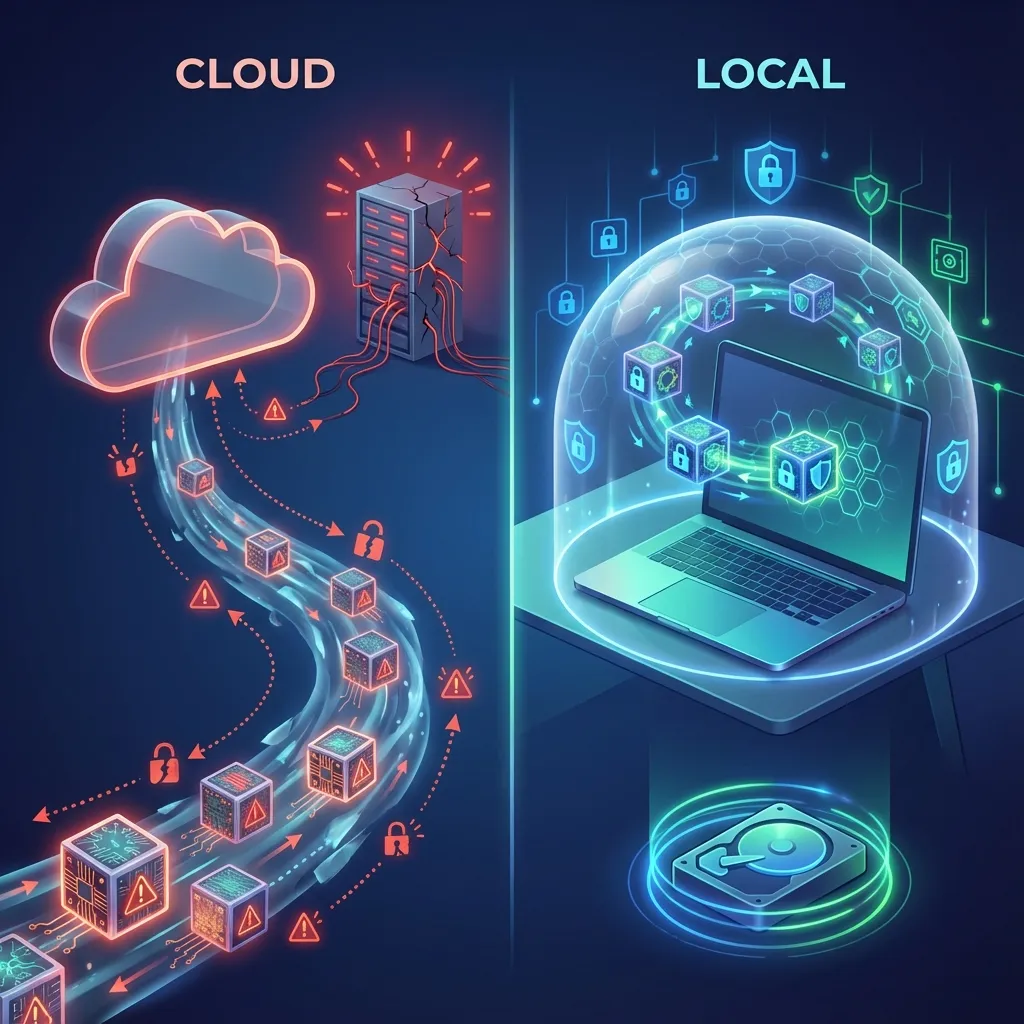
Those assurances matter. Uses differ in their constraints and risks, so a simple opposition between cloud and local storage is not very useful.
For particularly sensitive data such as passwords or keys, however, another question is worth asking: does the provider really need to keep this data to deliver its service?
If the answer is no, the problem changes. The question is no longer only which country, hosting provider or legal framework is best for storing a copy. It becomes possible to ask whether the central copy needs to exist at all.
Choosing carefully whom to entrust with data is one form of control. Not needing to entrust it is another.
Sovereignty through architecture
In this guide, sovereignty through architecture describes a design principle, not a certification or regulatory category: when a service does not need to hold data, avoiding central storage with the provider can reduce a dependency.
Consider a password vault. A company can choose a French or European cloud service to host it. That improves some aspects of sovereignty, such as location, jurisdiction, provider control or reversibility. The vault is still entrusted to remote infrastructure.
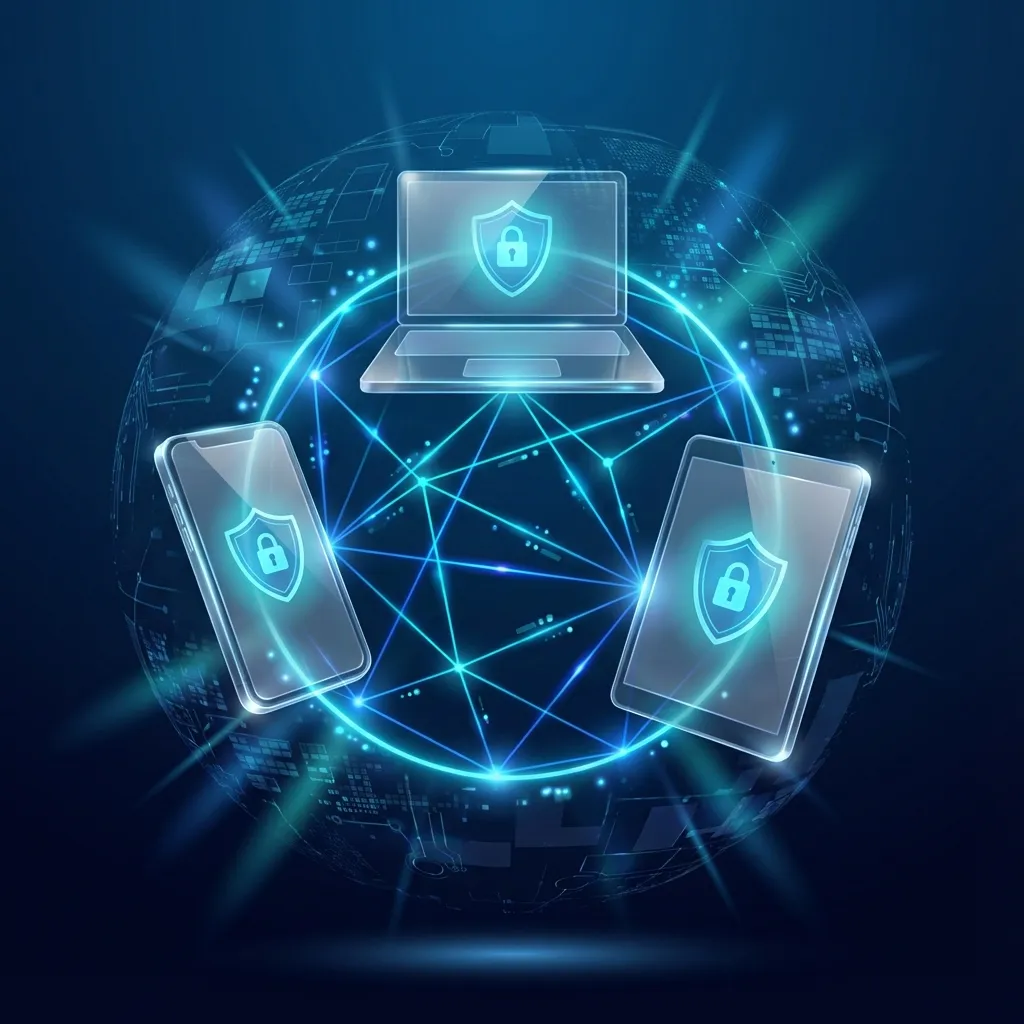
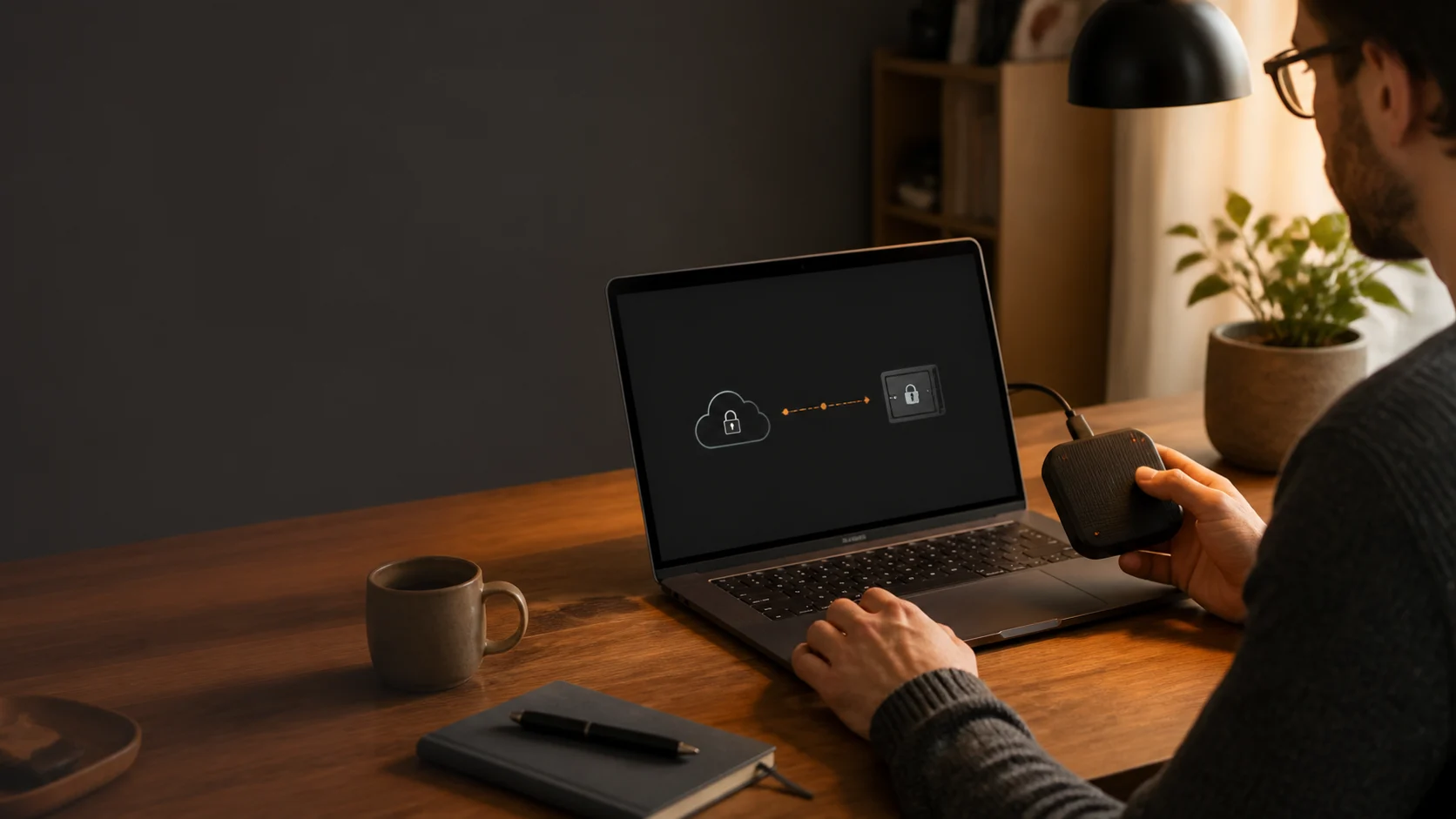
Soclyde makes a different architectural choice. The encrypted vault stays on the user’s authorised devices. When device synchronisation is used, it does not require Soclyde to keep a central copy of the vault.
This does not make location or jurisdiction irrelevant. It removes one question from the equation: there is no central Soclyde vault whose hosting country needs to be chosen.
For more detail, read the guide to local-first password managers and the local vs cloud comparison.
What this choice brings in practice
The first benefit is control. The vault stays on the user’s authorised devices. Soclyde does not need to become its central custodian to provide the service.
The second is offline access. Passwords remain available on authorised devices even without an internet connection.
The third is independence from the storage service. The vault does not depend on a Soclyde server storing it. Its data remains on authorised devices, reducing reliance on the continuous availability of central storage infrastructure at Soclyde.
The fourth concerns concentration of risk. Soclyde does not maintain a central repository containing its users’ vaults. This reduces the exposure associated with that concentration and avoids creating a central target at Soclyde that holds those vaults. This specific reduction does not protect against risks involving devices or other services.
Finally, this architectural benefit does not depend on the user’s nationality. Whether in France, Germany or the United States, Soclyde does not need to become the central custodian of the vault. Jurisdictions and technology dependencies may vary, but the architectural principle remains the same.
More control also means responsibilities
No architecture removes every risk. A compromised computer can expose secrets when they are unlocked, entered or used. A poorly secured backup can become another vulnerable copy. Vault encryption does not replace updates, device security or multi-factor authentication offered by the services you use.
Local-first therefore changes the trust model: vault security depends less on a central repository at the provider and more on protecting the user’s devices and backups.
For more on risks from compromised devices, see the infostealer guide.
One simple question
Digital sovereignty leads us to ask where our data is, which jurisdiction applies and which providers hold it.
We believe it also invites a simpler question: do we really need to entrust this data to someone else?
For passwords, Soclyde has made its choice: data we do not need to hold should not be entrusted to us.
Learn about Soclyde or contact the team to find out more.