
SOCLYDE logo
Current languageEN
Soclyde insightsSecurityZero-knowledge

Zero-knowledge encryption in password managers: practical guide

Understand zero-knowledge encryption, what it protects in password managers, and how local-first design strengthens your overall security posture.

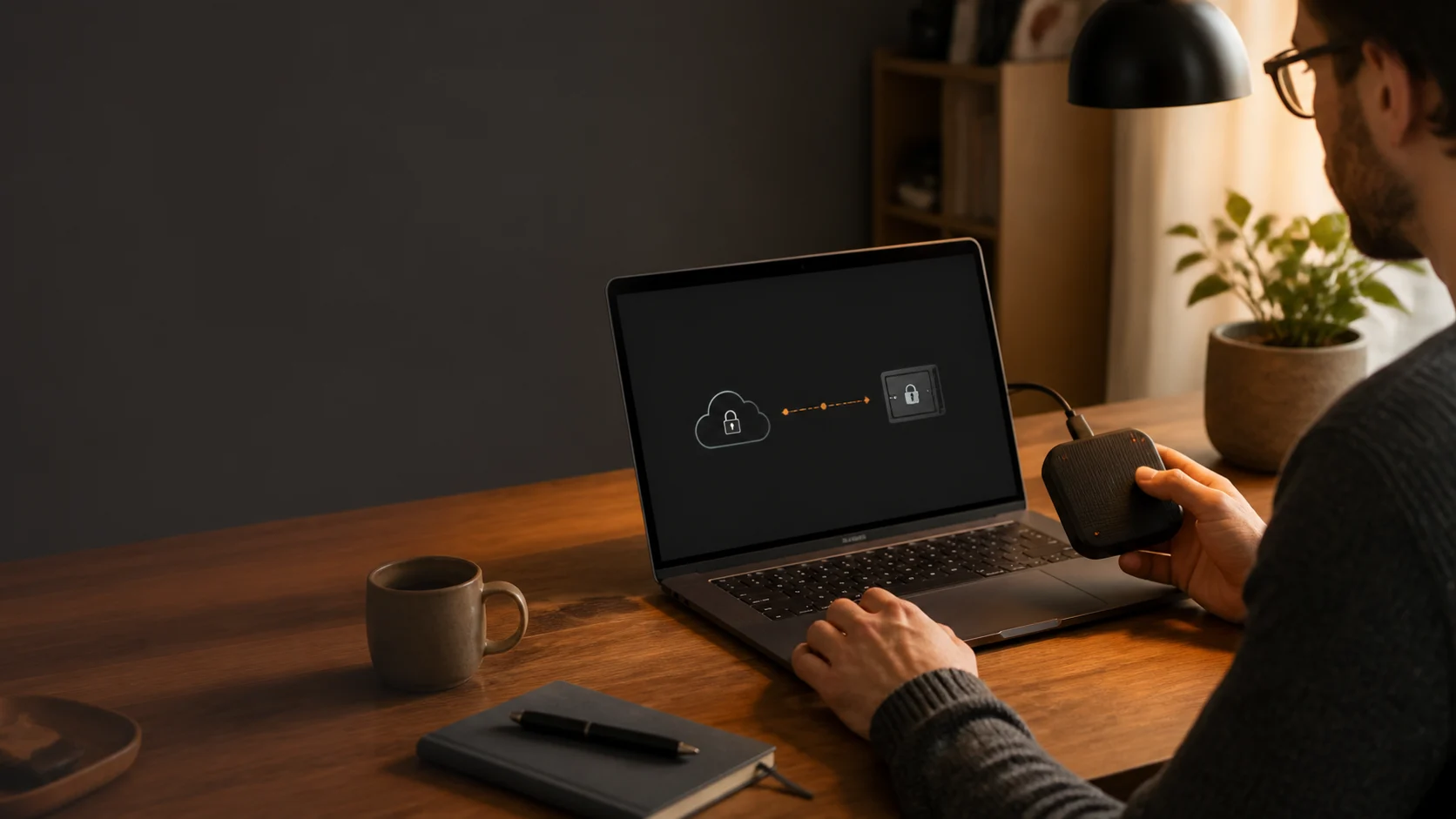
Visual representation of zero-knowledge encryption protecting data
Article contents

Key takeaways

  • Zero-knowledge means the provider does not have the key required to read the vault.
  • Encryption protects content, but not necessarily every metadata field or device.
  • Local-first design further reduces exposure by avoiding a central vault copy.

What is Zero-Knowledge Encryption and Why It Matters for Your Passwords

In the realm of digital security, "zero-knowledge encryption" is a powerful concept that fundamentally changes the trust model between you and a service provider. For password managers, it's a non-negotiable feature for true privacy and security.

Simply put, a system is "zero-knowledge" if the service provider (or anyone else) has zero knowledge of your sensitive data, even if they possess your encrypted information. This is achieved by ensuring that the encryption and decryption processes happen exclusively on your device, using a key that only you possess.

How Zero-Knowledge Works in Password Managers

When a password manager claims to be "zero-knowledge," it generally means:

  1. Local Encryption: Your password vault is encrypted on your device before it is ever transmitted or stored anywhere else.
  2. User-Controlled Key: The key to decrypt your vault is derived from your Master Password, which is known only to you. The service provider never sees, stores, or transmits your Master Password.
  3. Encrypted at Rest and in Transit: Your data remains encrypted whether it's stored (at rest) or being moved across networks (in transit).
  4. No Server-Side Decryption: The service provider's servers store only encrypted blobs of data. They lack the Master Password to decrypt these blobs, rendering the data unintelligible to them.

This means that even if a zero-knowledge password manager's servers are breached, the attackers would only get access to encrypted data for which they have no key, making it incredibly difficult, if not impossible, to access your actual passwords.

The Critical Importance for Password Managers

For a tool that stores the keys to your entire digital life, zero-knowledge encryption is paramount because it:

  • Protects Against Server Breaches: If the service provider's servers are compromised, your actual passwords remain safe.
  • Prevents Insider Access: Even employees of the password manager company cannot access your sensitive data.
  • Safeguards Against Legal Demands: The provider cannot comply with requests to hand over your unencrypted data, because they don't possess the means to decrypt it.
  • Builds Trust: It establishes a trust model where you don't have to fully trust the provider's honesty, only the mathematical strength of their encryption and the proper implementation of the zero-knowledge principle.

Soclyde: Taking Zero-Knowledge a Step Further

While many reputable cloud-based password managers boast zero-knowledge encryption, Soclyde elevates this concept by combining it with a local-first, decentralized architecture.

  • Local-First Zero-Knowledge: In Soclyde, your encrypted vault never even leaves your devices to go to a third-party server. This eliminates the "honeypot" effect entirely. The zero-knowledge principle is applied to data that is always under your control.
  • No Central Data Store: There is no central Soclyde server holding millions of encrypted vaults to be targeted. The zero-knowledge applies to data that is physically isolated on your devices.
  • Peer-to-Peer Synchronization: When syncing between devices, the data remains encrypted and is exchanged directly, without an intermediary server that could theoretically be compelled to store decrypted copies or metadata.

In essence, while cloud-based zero-knowledge means "we can't decrypt your data even though we have it on our servers," Soclyde's local-first zero-knowledge means "we don't even have your data on our servers to begin with, and we couldn't decrypt it if we did."

Choosing a password manager with zero-knowledge encryption is a foundational step in securing your digital identity. Choosing one that combines it with a local-first, decentralized approach, like Soclyde, provides the ultimate assurance that your most sensitive information remains truly yours and out of reach of everyone but you.

Frequently asked questions

Does zero-knowledge make a vault invulnerable?

No. It limits provider access to data, while key security, software quality, and device security remain decisive.

How is it different from local-first?

Zero-knowledge describes what the provider can know; local-first describes where data is primarily stored.

References

Sources and references

Need advice?

Design your password strategy with Soclyde

Schedule a dedicated walkthrough with the team to see how local-first security adapts to your stack.

Talk with us

Keep reading

We use cookies to stay compliant and measure usage.

You can decline non-essential cookies. We only run analytics after consent. Questions? contact@soclyde.com